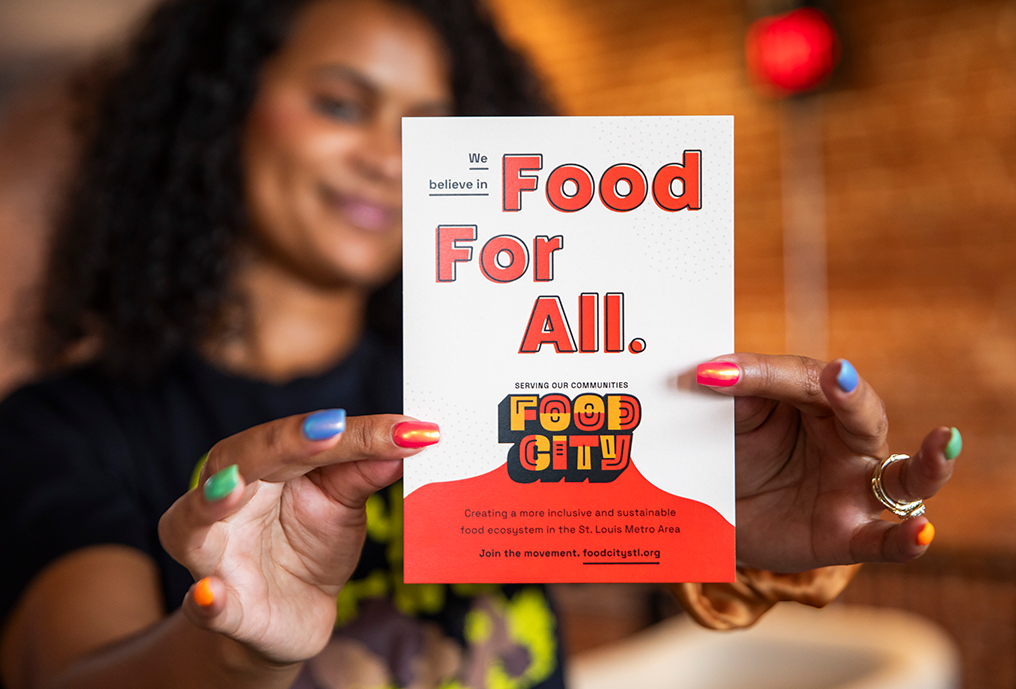
A future where food is a right, not a privilege.
Too many families in the St. Louis region live without reliable access to nourishing, affordable food. Not by accident, but as the result of decades of disinvestment, discrimination, and policy failure. Food City STL is working to change that. A community-driven initiative, Food City STL advances cross-sector partnerships and community-led solutions, developing a people-powered roadmap toward a more equitable food system. Founded by Serving Our Communities Foundation, this work moves St. Louis closer to a future where food is a right, not a privilege.

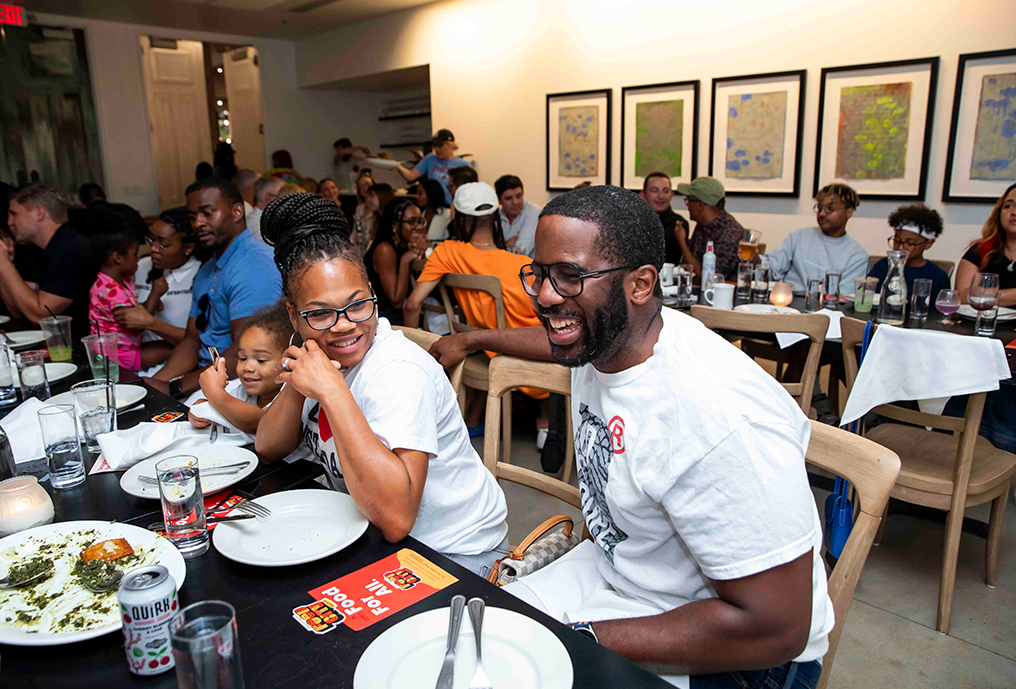
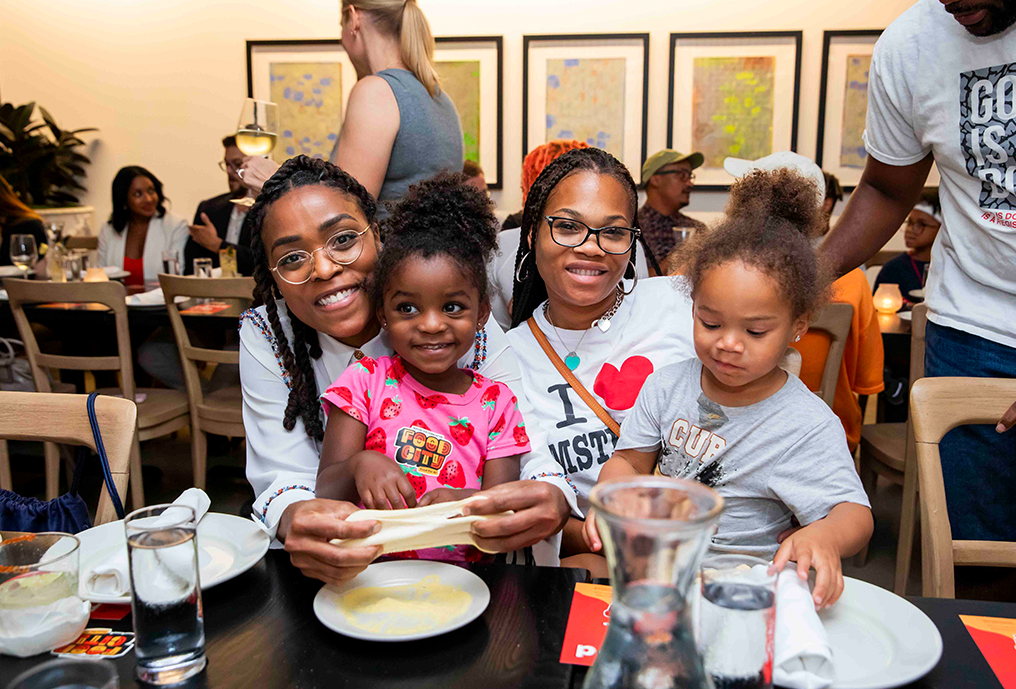
More than 400,000 people in the St. Louis region lack reliable access to food. Nearly 117,000 of them are children, roughly one in six. Black residents in St. Louis City face food insecurity at a rate of 35 percent. And the life expectancy gap between the city’s most and least resourced neighborhoods stretches to 18 years, a distance measured not just in miles but in decades of unequal access to the most basic conditions for health.
Serving Our Communities Foundation founded Food City STL in 2023 with a clear conviction: that the St. Louis food system could not be fixed from the top down, and that the people most affected by its failures had to be at the center of building something better.
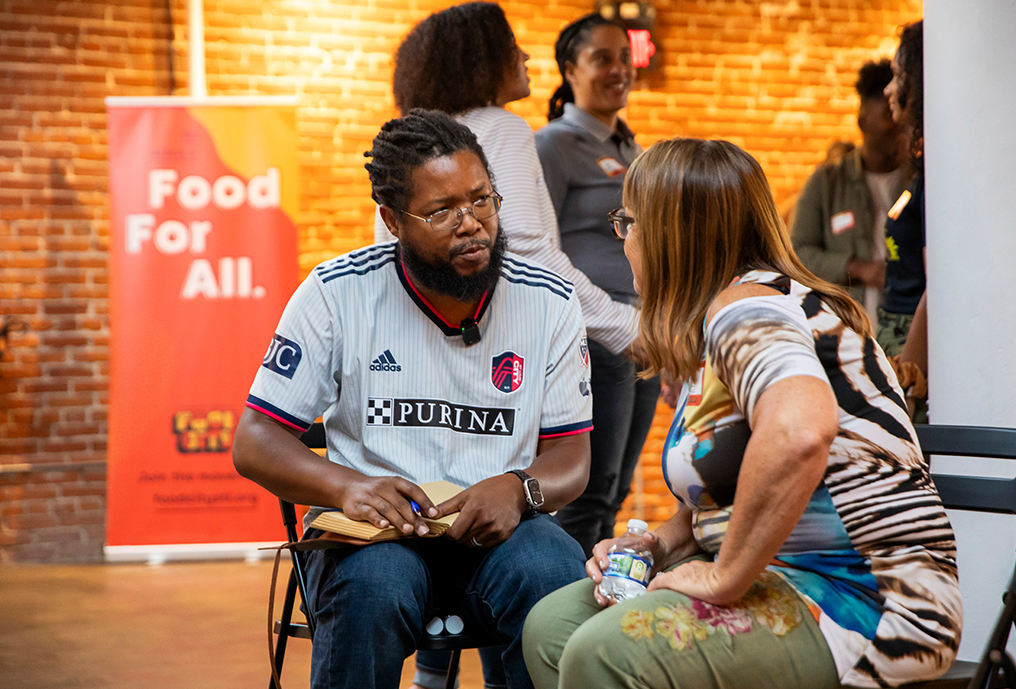
Since its launch, Food City STL has worked to transform St. Louis’s food system into one that is equitable, sustainable, and community-led. Guided by the belief that those most affected by food system challenges must shape the solutions, the initiative has centered the leadership, knowledge, and lived experiences of residents, farmers, food workers, advocates, and local businesses.
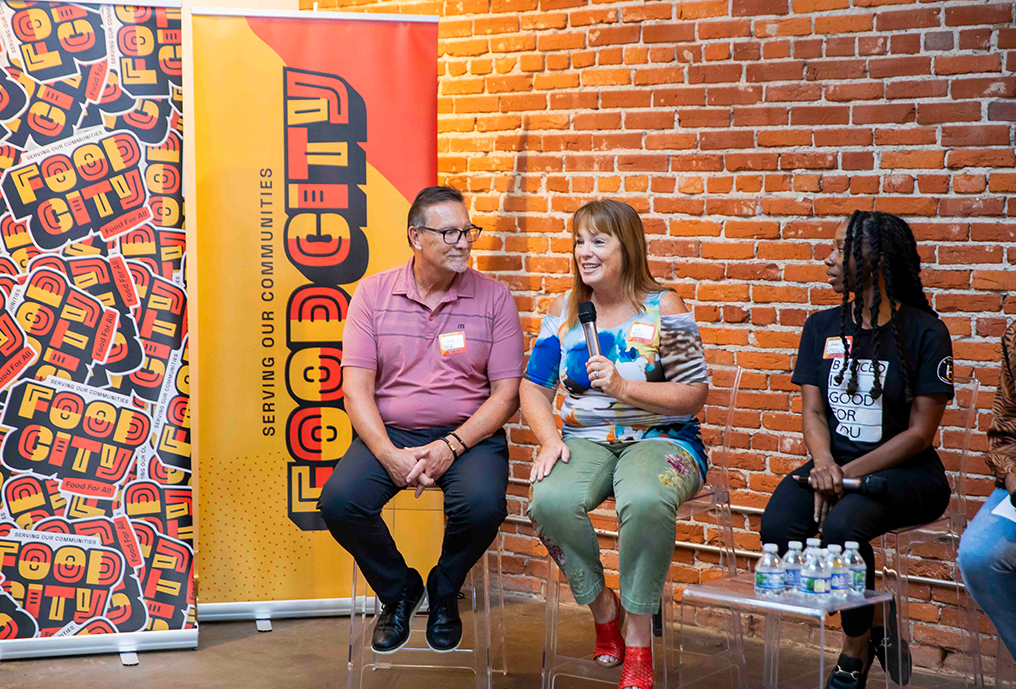
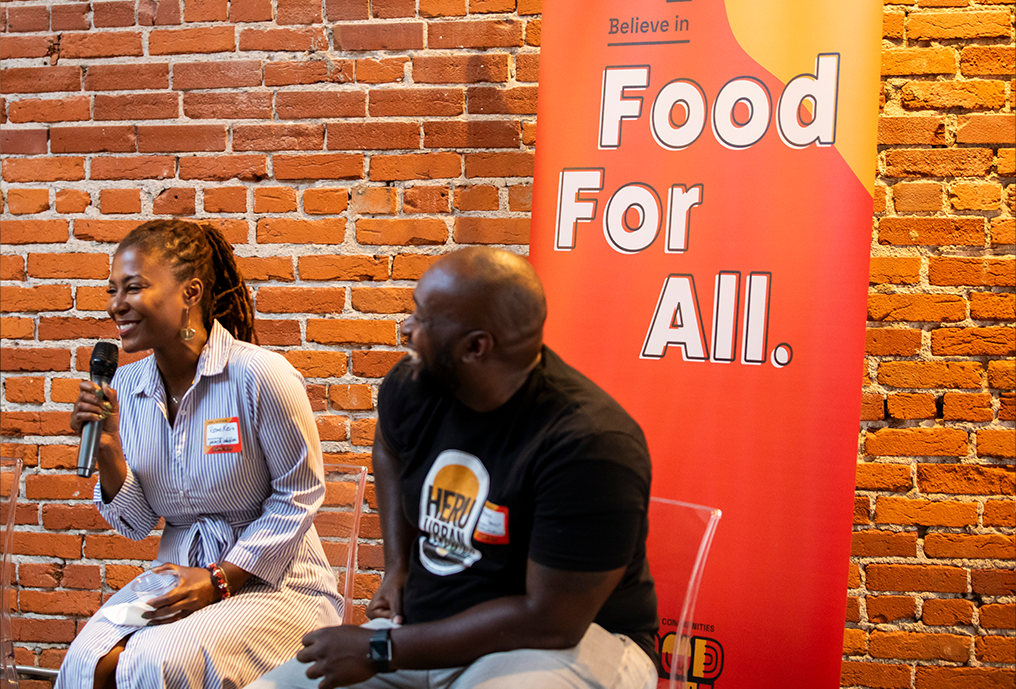
That work began with deep listening: citywide surveys, neighborhood dialogues, think tanks, and direct conversations with farmers, grocers, and community organizations. More than 2,000 insights from across the food ecosystem were gathered and synthesized, ensuring that the perspectives of historically underrepresented communities are embedded at every stage of decision-making.
From that listening, Food City co-created the Food For All Platform, a first-of-its-kind, community-authored roadmap designed to bridge the gap between grassroots priorities and institutional action. Built around six strategic pillars, the platform aligns policy to remove systemic barriers, practice to strengthen community-driven solutions, and partnership to unite government, philanthropy, business, and residents in a shared vision for change.
Food City has directed hundreds of thousands of dollars into the hands of urban farmers, food producers, and local businesses across the St. Louis region, with investments ranging from major grants to micro-funding that reaches the grassroots level of the food ecosystem. Nearly one million people have been reached digitally through the Food For All storytelling campaign, building public awareness and momentum for the work ahead.
In 2025, St. Louis Education Fund, led by President and Chief Executive Officer Haliday Douglas, became the fiscal sponsor of Food City STL. With their gracious support, that transition reflects the maturity and momentum of an initiative that has grown beyond its founding phase into a durable institution with deep community roots and a clear path forward.
Serving Our Communities Foundation’s role in founding Food City STL represents one of its most expansive investments: not in a single program or service, but in the infrastructure of a more just city. The work is ongoing. The table is being set for everyone.
Impact Timeline
“We believe that access to delicious, healthy food should be available to everyone, not just those fortunate enough to live in the right zip code. This is about building the infrastructure for a more just city, and it starts with listening to the people who know its needs best.”
Dr. Jan Marson
Founder, Serving Our Communities Foundation
Help Make Positive Change
Every investment in community is a step toward lasting change. Join Serving Our Communities Foundation in building opportunity, resilience, and equity for families in Nevada and Missouri.
Related Stories
Explore more impact across Nevada and Missouri.